Friday, 30 August 2013

Dr Martin Luther King Jnr's March on Washington speech still resonates today

I expect most people know something of the preacher from Atlanta, Georgia. If they don't know about Dr King as a person, they will probably know his famous 'I have a dream' speech. What makes it so memorable? The masses he spoke too at the National Mall in Washington D.C.? The gentle rise and fall in his tone? The way he pushed his papers aside and spoke of an ideal future America?

Looking at the pictures from that day in 1963, and there are thousands of pictures, Martin Luther King's speech was an incredible feat because it was centred on hope and faith in his country. Dr King gave his life for his people and country, because he knew there was something better. There was a better way for America to go than the segregated restaurants, buses, cities, and states. A better way where his children and his fellow citizens' children could play side-by-side. A better way where black men and white men could work and live together happily. He knew there was a Promised Land somewhere. A Promised Land where there is no hatred, racism, discrimination, injustice. A Promised Land where peace, love, and compassion towards one another would be viewed.

As he looked out over the promenade in front of Lincoln's Memorial and spoke those famous words, Dr King probably saw a glimpse of that better nation he dreamt of: in the crowd that day, there were white and black people united and unified. Was that what Dr King's dream was: a country that reflected what he saw before him from that platform?

Martin Luther King's dream has not been fulfilled completely. Yet, progress has been made on the journey towards the Promised Land he believed in and died for. As America and the world celebrates the 50th anniversary of the March on Washington, looking towards the future, there are clear signs that Dr King's dream is being realised.

First there was the hope that Abraham Lincoln showed as he signed the Emancipation Proclamation in 1883, so fervently described by Dr King and remembered by the memorial in Washington. Then there was the hope that Dr King brought in 1963, now remembered with the newest memorial in the United States' capital. Although he did not live to see significant progress, before his assassination in 1968, Dr King continued and continues to look over America, and indeed the world as this anniversary shows, as his dream and the hope for peace, love, and compassion towards one another continues.

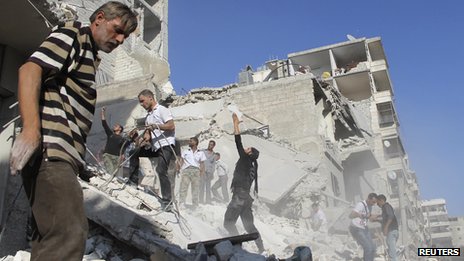
The memorial is not just a symbol for America though. It is for the world. The things Dr King died for still resonate today globally. While the Holocaust and First and Second World Wars provide important lessons for today, the history of the American Civil Rights Movement is also relevant for today. It is not just a racial relevance though. Injustice... racism... discrimination... hatred... are seen in the news, media, and society today. Yesterday, the House of Commons voted against British action in Syria. President Assad and his side, the rebels, the jihadist groups are engulfed in a situation that involves all of these. The British Prime Minister has said that war crimes have been committed there. Whoever is doing so worse is irrelevant for now. The point is that the democratic, equal country and peaceful, compassionate Promised Land Dr King dreamt of is not happening. Syria is only one example. There are many more cases where inequalities are apparent. The values of peace, equality, justice and unity must be the driving force of any solution to the Syria conflict and other global situations. Dr King's famous speech to America is not just a pro-America and pro-democracy one, but a pro-world and pro-peace one.
Listen to global figures read Dr King's 'I have a dream speech' (the link is at the bottom) and remember the hope that he had for his people and country. However, you may also feel that due to the concept of the video and recording, his speech is suddenly relevant for the world; it does not sound like it is just a personal matter, relevant for the black people, rather it sounds like he is speaking to you and to me. Democracy is about 'them' as much as it is about 'us'. 'I have a dream today' is about 'us' as much as it is about 'them'.

There are many other links, videos, and articles about Martin Luther King, his speeches, and civil rights movement on the BBC website to explore. History can tell us a lot about today so have a look at them. Look into the reasons and decisions around Syria and the British vote. What about writing to your MP about the issue; after all it is a democracy where they represent the people. But let's remember and celebrate that famous speech, man, and day 50 years ago, and not just for that famous line, 'I have a dream'.

Click to listen to this new recording of the speech:
http://www.bbc.co.uk/news/magazine-23853578
[at the bottom of the page there are further links to other material]

Click to find out about the British vote in parliament:
http://www.bbc.co.uk/news/uk-politics-23892783

Click to learn about the US's response:
http://www.washingtonpost.com/world/national-security/obama-administration-prepares-intelligence-case-on-syrian-use-of-chemical-weapons/2013/08/29/3002f180-10b6-11e3-bdf6-e4fc677d94a1_story.html?wpisrc=nl_politics

Click to find your local MP and how they voted [plus, information about how to contact them]:
http://www.publicwhip.org.uk/index.php

Wednesday, 21 August 2013

Stimulated, inspired, and prepared to reach generations


alt
One of the highlights of the Holocaust Educational Trust's Ambassador Conference was the testimony that Hannah Lewis gave. A Holocaust survivor who came to Britain in 1949, Hannah is from a small market town in Poland. As a child, she experienced ghetto life, a labour camp, and the murder of most of her family. Only she and her father survived the war, which for many of the conference delegates, was hard-hitting. With a live Twitter feed, ITV News UK editor, Lucy Manning, led the discussion, which for both Hannah and the delegation was an emotional one. It was interesting that Hannah had only recently begun sharing her testimony with young people. For many survivors, it is very difficult to recall their memories of the Holocaust, but we were so thankful for the time and energy Hannah gave to help us as we look to educate generations about the Holocaust and its relevance for today. For me, Hannah's story, as well as other survivor testimonies, are inspirations to ensure that the atrocities of the Holocaust are not forgotten and not repeated. Each story is unique, different, and special. Every ambassador who heard Hannah at the QEII Conference Centre on Monday 8th July has a responsible to pass Hannah's and others' stories on and ensure that it remains a living history.
This testimony was one of the more personal sessions of the day. Not all were so moving though... Before and after lunch, each delegate attended two academic workshops about an aspect of the Holocaust. I obviously cannot give an outline of every seminar. However, from those I attended, they were informative, stimulating, thought-provoking and engaging. The first I sat through was taken by Professor Richard Overy from Exeter University and author of several works on Nazism and the Second World War. The second was by Professor David Cesarani from Royal Holloway, University of London, a leading British historian on the Holocaust. Professor Overy caused us to think how such horrors could have been carried out; were the perpetrators 'monsters' or were they ordinary men, simply doing their jobs? Professor Cesarani helped us analyse the Nazis' policy concerning the 'Jewish Question', unpicking several of the conventional words we use for this period of history, such as the 'Holocaust', and raising questions about the origin of 'Judenpolitik'. Speaking to other ambassadors about some of the other sessions, these workshops certainly developed our understanding and knowledge of the Holocaust, so we can pass on the relevance and lessons of the concept to generations more accurately.
The final part of the day featured a panelled discussion with some of the main speakers about why the Holocaust matters. While there was debate amongst the panellists, all agreed that the Holocaust mattered to a large extent. As Professor Bauer repeatedly argued, the Holocaust was not unique; it was unprecedented. Genocides are universal but cannot be dealt with without an understanding of the past. How do you do that? Shami Chakrabarti argued that positivity is needed, while Trudy Gold, from the London Jewish Cultural Centre, stressed that the little personal stories help understand the past the best. The Holocaust is not only to be remembered once a year, like on memorial days, throughout the year; remembrance days provide a platform for people to learn about what happened to the Jews under the Nazis constantly. It should be something to be seized and not shied away from. These were just some of the points made in what was an interesting and encouraging dialogue to close the Ambassador Conference and prepare us for reaching generations.
Reaching generations... This sounds like a difficult task and certainly suggests an immensely heavy burden to bear. However, having attended the conference, I and many of the other ambassadors feel prepared, thrilled, and eager to pursue this task. The task of reaching peers, communities, friends, and family with the relevance of the Holocaust and past for today so that such atrocities and horrors are not repeated. The Holocaust Educational Trust certainly helped us take one more step as messengers of important lessons and stories that cannot be forgotten; ones that provide the question 'that was then, what about today?'

Tuesday, 6 August 2013

500 come together to hear from Bauer, Robinson, and Co.

500 young people from universities and sixth forms across the country arrived at the Queen Elizabeth II Conference Centre early on Monday 8th July. On arrival they collected conference packs and signed up to two seminars by renown lecturers and academics of their choice. This was how a phenomenal conference at a fantastic venue and with stimulating speakers organised by the Holocaust Educational Trust began.
It was inspirational to see so many people the same age enthusiastic about spending a day learning about the Holocaust and the lessons we can take from it. How the Trust organised such an event, I do not know. However, they did it and, after hours of tiresome work, it proved a great success. The day was stimulating and thought-provoking and caused us to develop our understanding about the genocide of the Jewish people by the Nazis. Although everyone was exhausted from such a long and packed day, we came away a little more prepared for reaching generations with the lessons of the Holocaust.
The conference theme was 'Reaching Generations'. As it was a launch and gathering of the Trust's Ambassador programme, the conference aimed to equip us with the knowledge to carry out our roles as ambassadors, or messengers, for the HET and the lessons of the Holocaust for today. Nick Robinson, who opened the conference, spoke about the importance of our roles as, not only a representative, but a messenger for the HET to our communities and generations. He stressed the unique responsibility and importance of our roles; we are the final generation who can hear the stories of the survivors of the Holocaust. Nick set a wonderful tone and objective for the delegation, which was immediately taken up by one of the world's leading historians of the Holocaust.
Based at Yad Vashem, Jerusalem and author of 40 related books, Professor Yehuda Bauer was a brilliant choice of speaker for the day. What he lacked in physical charisma, he made up for in his rhetoric. He caused us to completely think afresh what is meant by the Holocaust. For example, where did it start? Was it 1939, 1933, or even the First World War? Furthermore, he unpicked the traditional notion of the uniqueness of the genocide; rather the Holocaust is an unprecedented event as it can happen again. He stressed that rather than say 'never again' to the Holocaust, we should say 'ever again'.
Ambassadors were  attuned from Professor Bauer to the relevant mind-set for the following academic workshops and the rest of the day. Yet, what is the use of having such information if you do not know how to put it into action? This problem was solved by Shami Chakrabarti. As a human rights campaigner, Shami encouraged us to, as ambassadors, live the values of dignity, fairness, and, the most important, equal treatment. She, like Nick Robinson, stressed the importance of our roles as ambassadors for these lessons; we can use what we have at our disposal, whether that is writing, speaking, media, to promote these values against racism, discrimination, and injustice.
These three renown speakers and individuals, who have each played their part in Holocaust education and human rights, were excellent choices for the first Ambassador Conference. As they reached out to the conference delegation, they were helping us be able to reach generations.
However, they were not the only speakers. There was a wide variety of workshops to attend, such as 'German perpetrators' and 'Life beyond Auschwitz', with speakers like David Ceserani, a well known professor and historian on the Holocaust. There was also a chance to hear from Hannah Lewis, a survivor of the Holocaust, who told a very moving but inspiring account of her experiences. Then there were small snippets of the work of the Holocaust Educational Trust as well as general time to get to know each other, as ambassadors, better. But that can wait for the next blog post...

Monday, 29 July 2013

Holocaust Educational Trust Celebrates Birthday With Conference and Visit to Israel

2013 marks the 25th anniversary of the Holocaust Educational Trust. Established in 1988 by Lord Janner of Braunstone and Lord Merlyn-Rees to educate young people across the United Kingdom about the Holocaust and its lessons for today, the Holocaust Educational Trust has celebrated its birthday this July with a massive new exciting programme.

The Trust's four-part programme, Lessons from Auschwitz, ran for the 100th time this year and carried it's 20,000th sixth form student to the former extermination camp in Poland. It is difficult to dispute the statement that the Trust has gone from strength to strength in the last 25 years. However, it has shown potential for even greater things in the future with the launch of their new Ambassadors programme.
Every single young person who takes part in Lessons from Auschwitz becomes an ambassador for the Trust and Holocaust education. While the Trust can only take two students from each sixth form college at a time, it has affected the lives of 20,000 17-18 year-olds from the entire nation. Therefore, the Trust wishes to create a network amongst these ambassadors to help them communicate the lessons that they learnt for today from the horrors of Auschwitz-Birkenau.
To do this, the Holocaust Educational Trust appointed a cohort of 25 Regional Ambassadors. Their aim? To represent the Trust and educate about the Holocaust in their region. More specifically, to connect with the ambassadors in their area and thereby strength their links with the Trust. It was exciting news to hear of this venture, but even more thrilling was Monday 8th July.

On Monday 8th, the Trust held their very first Ambassador Conference to launch their new Ambassador programme of student and regional ambassadors. 500 young people attended the day at the Queen Elizabeth II Conference Centre to listen to world-renown speakers. While nerves in the Trust's brilliant team were high, the day was a huge success, not least because they could see enthusiastic, excited, and passionate people wanting to know more about the Holocaust to tell their friends and communities.

Was this the only celebration though?

Absolutely not! The following week, 23 acquaintances of the Trust met at Luton Airport early one morning to take part in the Holocaust Educational Trust's first ambassador study visit to the homeland of the Jews: Israel. Having not met each other before and anticipating strict security, nerves were very high again! Israel. The Trust ran this visit to complement the knowledge gained at the conference and consolidate the aims of the Trust for the regional ambassadors. Israel. Specifically, the visit was to Yad Vashem, Jerusalem, the site of a museum about and memorial to the Holocaust and International School of Holocaust Studies. Israel. There were lectures and workshops by several academics, field workers, and survivors, which would enable the ambassadors to communicate the lessons of the Holocaust to their regions and communities. Israel. It felt dreamlike, but was also an incredible reality. The opportunity to be part of this milestone was a life-changing and lifetime experience for all 23 ambassadors. They returned to the UK understanding that the Holocaust is not just limited to Auschwitz and is relevant for today. They were equipped and inspired all the more to promote and educate their communities and regions about the Holocaust.

And so the Trust's 25th anniversary has been celebrated in magnificent ways, which create hopeful prospects for the future as the ambassadors who attended the conference and participants who visited Israel take what they heard from older and academic generations to their present and future generations. ________________________________________________________________________

Why write this post and blog?
Well I have been fortunate to see and experience the work of the Holocaust Educational Trust. I have undertaken the Lessons from Auschwitz programme, attended their Ambassador Conference, and experienced the joy of being one of those 23 who visited Israel. Having recently become one of this first cohort of regional ambassadors, I have seen the enormity but also relevance of the Trust's task. I wish to reach generations with the lessons I have learnt from Auschwitz and Israel. For this reason, I hope to let you hear about my experiences at the Conference and in Israel, the importance of the Holocaust for today, and the work of the Holocaust Educational Trust in the future.

Tuesday, 21 May 2013

All in the Lord's strength

Going through my first university exams this week, I have learnt and been reminded that all we do is in the Lord's strength.

God declares against the house of Eli in 1 Samuel 2:30, "Those who honour me I will honour, but those who despise me will be disdained."

And through Isaiah he comforts his people saying,
"He gives strength to the weary and increases the power of the weak.
... Even youths grow tired and weary, and young men stumble and fall;
but those who hope in the Lord will renew their strength.
They will soar on wings like eagles; they will run and not grow weary,
they will walk and not be faint." (Isaiah 40:29-31).

These numerous 'They will' remind that these are sure and trustworthy. He does not let you fall. Exams are not stress over when the Lord is your God and Saviour. Life is not to worry over when you trust, love, and obey God. Trust him.

Many blesses,
Andrew

Saturday, 2 February 2013

Enjoy!


Implications of HMD

Here we are then; the end of Holocaust Memorial Week. Another week of remembrance over for another year. Well, in terms of our calendar that is! I believe that the Holocaust and genocides should not only be remembered once a year but the whole year, 24/7. This is only going to get harder: as the survivors of the Second World War atrocities slowly pass away, it is the duty of this generation, your generation to ensure the lessons learnt from past genocides are continued and injustice is frowned upon.

What are you thankful for?

When I try to answer this, all I get is a massive long list which includes friends, family, events, opportunities and much more! But I think one of the major things I am thankful for is my community. Especially the new community of Canterbury City and Canterbury Christ Church University which I am in. I have been brought into this, on purpose by God, and have been so blessed by what I have received so far. I really want to give something back to the community that has received me. I cannot think of major activities that I may be useful in but I can start small in university and church and work out from there.

This is a personal goal but I also have an underlying reason: to ensure everyone can be made welcome and feel included in the workings of the community, to bring the community together.

As an ambassador for the Holocaust Educational Trust, I pray that you will do the same. It doesn't have to be big, just the tiniest thing in your community will be a stand against dehumanisation and injustice.

The theme of this week is Build a Bridge. There is still time to make the pledge on the HMD webpage, but now, as I finish my blog for this week, make a pledge in your own heart to bring your community together.

The past genocides were real, the victimised were real human beings, the people were real communities.

Think about practical things wherever you are, whether in the workplace, school, unversity, that you could to continue remembering the value of humanity.

What will you do this year until the next time for rememberance to bring your community together?

Finally, thank you for reading my blog. I hope it has been enjoyable, to the extent that this topic gives, and I wish you every best as you reflect on these lessons.